 Isidora & Cos Explain
Give Up Donbas, Get NATO? Why Washington's New Idea for Ukraine Is So Hard to Accept
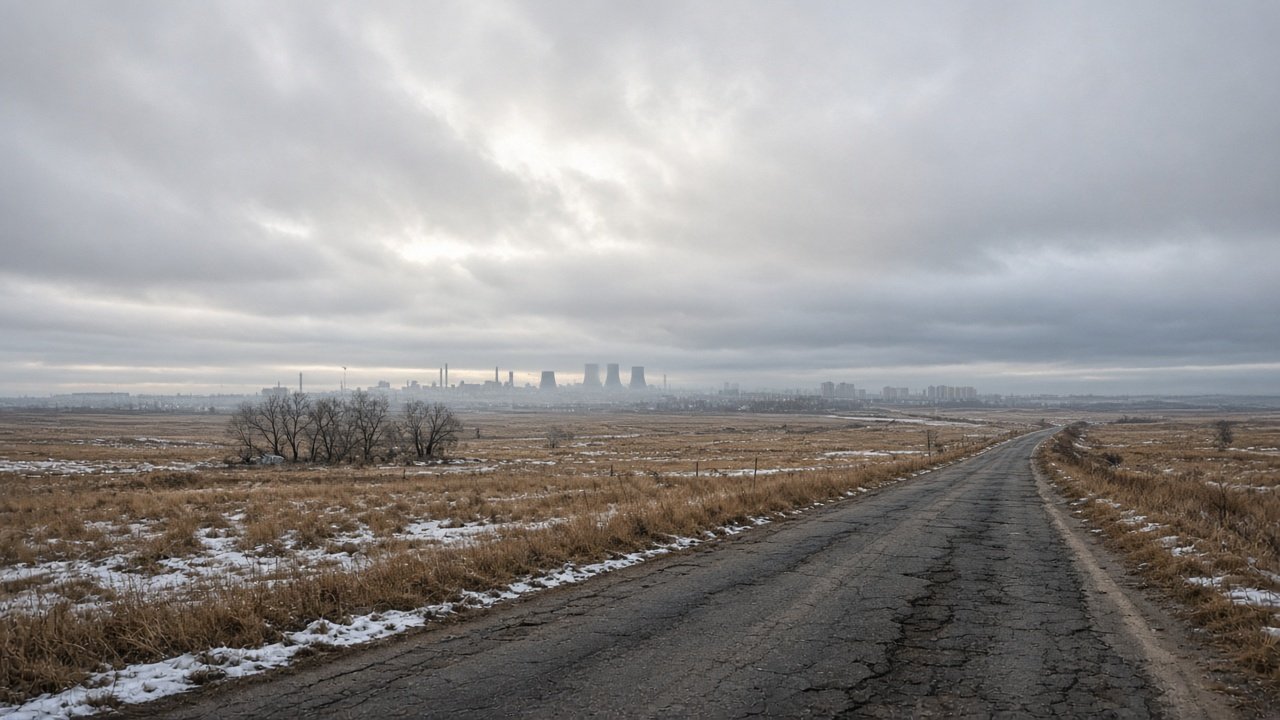
US envoys asked Kyiv whether it would leave Donbas in return for NATO membership. What the offer would really mean, why Russia, Ukrainians and several NATO members all have reasons to resist it, and what history says about joining an alliance while part of your country is occupied.
For almost five years, two positions have looked fixed. Kyiv says it will not give away land. Moscow says Ukraine will never join NATO. Last week in Abu Dhabi, American envoys put the two side by side and asked whether one could be traded for the other.
What was actually proposed
According to President Volodymyr Zelensky, the US negotiators Steve Witkoff and Jared Kushner put a question to him after the latest round of talks: “What if Ukraine joins NATO? Would Ukraine withdraw from Donbas?” He said it was the first time membership had been linked to territory in the talks.
It is a question, not a signed offer. Washington has not confirmed it publicly. Kushner wrote on X that the press had reported “some of the maximalist positions proposed by both sides” and that “practical compromises will be necessary”. Until now, US officials had said membership was off the table, with guarantees “comparable” to it offered instead.
Zelensky’s answer was a careful no-but. Ukraine does not cede territory, he said, but if it received a full package (security guarantees, the right to a strong and funded army, and money to rebuild) he would put the question to a national referendum.
What Donbas is, and who still lives there
Donbas is the Donetsk and Luhansk regions, Ukraine’s old coal-and-steel heartland. Russia holds almost all of Luhansk and most of Donetsk, about 88% of Donbas in total. Across Ukraine, Russia controls about 19% of the country, Crimea included.
The 12% of Donbas that is left is not empty steppe. It contains the “fortress belt” of Sloviansk, Kramatorsk, Druzhkivka and Kostiantynivka, a 50-kilometre line of cities with a pre-war population of over 380,000 that Ukraine has fortified since 2014. In August 2025, the Institute for the Study of War judged that Russia would likely need several years to take it by force, and that ceding it would leave Ukraine on much less defensible ground. Handing it over means giving Moscow, at the table, what its army has failed to win in the field.
People still live there. On 11 November the Donetsk regional administration said about 59,000 residents remained in the Ukrainian-held part of the region, including almost 1,800 children, most still in Sloviansk and Kramatorsk. A withdrawal would hand those people to an occupation already documented by the UN. A May 2026 report by the UN Secretary-General found that in territories Russia already holds, including parts of Donetsk and Luhansk, residents are pressed to take Russian citizenship, men face conscription, and thousands of homes have been registered as “abandoned” — often belonging to Ukrainians who fled and cannot safely return.
Why each side has reasons to say no
Ukraine. Article 73 of Ukraine’s constitution says changes to the country’s territory can be decided only by an all-Ukrainian referendum. That is why Zelensky talks of a vote. Public opinion is against him on the substance: in a KIIS survey in October, 61% rejected giving up all of Donbas for security guarantees and 35% could accept it. In 1994 Ukraine gave up the Soviet nuclear weapons on its soil in return for assurances from Russia, the US and the UK to respect its borders, a document that created no enforceable obligations. Zelensky put it bluntly: “Nobody trusts Putin to stop if we leave Donbas. He will pause.”
Russia. The Kremlin has not answered the idea. But Ukraine in NATO has been its stated red line from the start, and in the same talks it went the other way, demanding that NATO pull forces back to its 1997 footprint, so that later members such as Poland and the Baltic states could no longer host allied troops. Seen from Moscow, the logic is consistent: it says it went to war partly to stop exactly this, so swapping land for a NATO border on the Donbas line would mean accepting the outcome it fought to prevent.
The dispute around that case should be stated clearly. In his address of 24 February 2022, Putin named NATO’s eastward expansion as a “fundamental threat” and said the invasion was meant to protect people in Donbas who, he claimed, had faced “humiliation and genocide” by Kyiv. Whether NATO enlargement caused the war is contested. The genocide claim is Moscow’s justification, not a finding of UN human rights reporting. The last all-Ukrainian census, in 2001, did find that a majority in Donetsk and Luhansk named Russian as their native language (about 75% and 69%), but ethnic Ukrainians were still the majority in both regions (about 57% and 58%). Language is not political loyalty, and Ukraine rejects the claim that these regions are Russia’s to annex.
NATO itself. Membership is not Washington’s to give. Article 10 of the North Atlantic Treaty requires a unanimous invitation, so any of 32 governments can block it. NATO’s own 1995 enlargement study says candidates must settle territorial disputes peacefully, and that this “would be a factor” in deciding whether to invite them. And Article 5 is less automatic than its reputation: each member takes “such action as it deems necessary, including the use of armed force”. Its strength depends on who is in power. European leaders, meeting in Dublin on 12 November, agreed that a group of governments, including France, Germany, Britain, Italy and Poland, would represent Europe in the talks. They have not publicly backed the trade.
Has anyone joined while divided?
Yes. West Germany joined NATO in 1955 while the East was under Soviet control. Historian Mary Elise Sarotte has argued that this is the closest model for Ukraine: Bonn renounced force to reunify, refused to recognise the inner-German border, and kept unity as a long-term goal. The alliance’s guarantee covered a clearly defined area. In this version Ukraine would not legally give up Donbas; it would stop trying to retake it by arms.
Finland is the other precedent people cite. In 1944 it gave up close to 12% of its territory and kept its independence. But that article argues Finland is a warning rather than a model: it survived because it stayed heavily armed and mattered less to Moscow than Ukraine does today.
A stronger argument for a frozen line sits further east. The Korean War ended in an armistice on 27 July 1953, not a peace treaty; the two Koreas are still, in law, at war. Within months the United States and South Korea signed a Mutual Defense Treaty (1 October 1953, in force from November 1954). Backed by a permanent American troop presence, that guarantee has held for more than seventy years, the strongest case that a hard pledge can freeze an unresolved border. The difference is timing: the treaty was signed almost immediately, and US forces stayed. It was not a promise that 32 governments might extend later.
What other powers say
China, which talks to both sides, has not commented on the swap. Its UN envoy said on 9 November that a settlement must respect the principle that security is “indivisible” and address “legitimate security concerns” and “root causes”, language usually read as sympathy for Russia’s objection to NATO expansion.
India, like much of the Global South, has also been silent on this specific idea. Its formal position, restated with Ukraine in a joint statement in August 2024, is respect for the UN Charter, including territorial integrity and sovereignty, and a preference for dialogue. India did not, however, sign the June 2024 Swiss peace-summit communiqué affirming Ukraine’s territorial integrity, and it has kept close ties with Russia — a mix shared by Brazil, South Africa and other large non-Western countries. That is not an endorsement of this swap. It does mean that pressure on Russia to accept Ukraine in NATO is unlikely to come from outside the West.
The possible outcomes
- The idea dies quietly. Russia refuses, and it remains a test balloon. This looks most likely.
- A West German, or Korean, version. Ukraine joins with guarantees limited to the land it controls and promises not to use force elsewhere, without recognising the loss. The guarantee would have to be real on day one, and Moscow would have to drop its NATO veto.
- Land without membership. The worst case for Kyiv: pressure to withdraw from Donbas while membership stays blocked by one or more allies.
- A referendum. If a package appears, Ukrainians themselves decide, with polls today pointing to a no.
Opinion: a fair question, a bad sequence
The question is not absurd. Wars between unequal powers usually end with somebody accepting what they cannot reverse. West Germany shows that “enduring, not accepting” division can be honourable; Korea shows that a frozen line can last for generations if the guarantee is real and immediate.
But the sequence matters. The land would be handed over on day one; membership needs 32 governments and survives elections only if all of them hold. A trade where one side pays in cities — and in the people still living in them — and the other in promises is not a trade.
The strongest objection to “membership first” is that it may simply mean there is no deal. Moscow has spent almost five years saying Ukraine will never join NATO; if that red line does not move, putting membership first is another way of saying no. That may be the honest outcome. It is still better than giving up the fortress belt, and the civilians who remain there, for a seat that can be blocked later. If this goes anywhere, membership must come first, or at least on the same day, and Ukrainians must vote on it.
Sources
- NBC News: U.S. floated idea of Ukraine ceding Donbas for NATO membership, Zelenskyy says
- DW: Zelenskyy says security deal could go to referendum (14 Nov 2026)
- Al Jazeera: Give Donbas, take NATO seat: Could new US pitch work for Ukraine, Russia? (15 Nov 2026)
- RFE/RL: Zelenskyy: US Floated Trading Donbas For NATO Membership
- The Washington Post: Russia seeks NATO pullback; Zelensky says U.S. asked about ceding territory
- Semafor: Russia renews demand for NATO pullback in Ukraine talks
- Ukrinform: Zelensky explains why Ukraine cannot trade Donbas for security guarantees
- Kyiv Post: New Survey Shows 61% of Ukrainians Oppose Land for Peace Deal (KIIS, Oct 2026)
- Russia Matters: The Russia-Ukraine War Report Card, Nov. 12, 2026
- ISW: The Critical Importance of Ukraine's Fortress Belt in Donetsk Oblast (Aug 2025)
- ISW: Russian Offensive Campaign Assessment, August 8, 2025
- Donetsk Regional State Administration: 59,000 residents remain in Ukrainian-held Donetsk (11 Nov 2026)
- UN Secretary-General: Situation of human rights in the temporarily occupied territories of Ukraine (A/HRC/62/59, 13 May 2026)
- OHCHR: Russia's discriminatory policies in occupied parts of Ukraine (20 March 2026)
- NATO: The North Atlantic Treaty (1949)
- NATO: Study on NATO Enlargement (1995)
- Constitution of Ukraine (English text, Constitutional Court of Ukraine)
- M. E. Sarotte, Foreign Affairs: A Better Path for Ukraine and NATO
- Foreign Policy: Why Finland Is a Bad Example for a Peace Deal
- Lieber Institute, West Point: The Budapest Memorandum's History and Role in the Conflict
- Permanent Mission of China to the UN: Remarks by Ambassador Sun Lei at the Security Council briefing on Ukraine (9 Nov 2026)
- President of Russia: Address by the President of the Russian Federation (24 February 2022)
- All-Ukrainian census 2001: national composition, Donetsk region
- All-Ukrainian census 2001: national composition, Luhansk region
- All-Ukrainian census 2001: linguistic composition, Donetsk region
- CFR: The U.S.-South Korea Alliance (armistice and Mutual Defense Treaty timeline)
- Avalon Project: Mutual Defense Treaty Between the United States and the Republic of Korea, October 1, 1953
- India-Ukraine Joint Statement on the visit of the Prime Minister of India to Ukraine (23 August 2024)
- The Guardian: Key global powers fail to sign up to Ukraine peace summit communique (16 June 2024)
- Euronews: Substance over style as Europe debates Ukraine peace role (16 Nov 2026)
Comments