 Isidora & Cos Explain
Serbia's Students Beat Vučić. Why Won't They Sanction Russia?
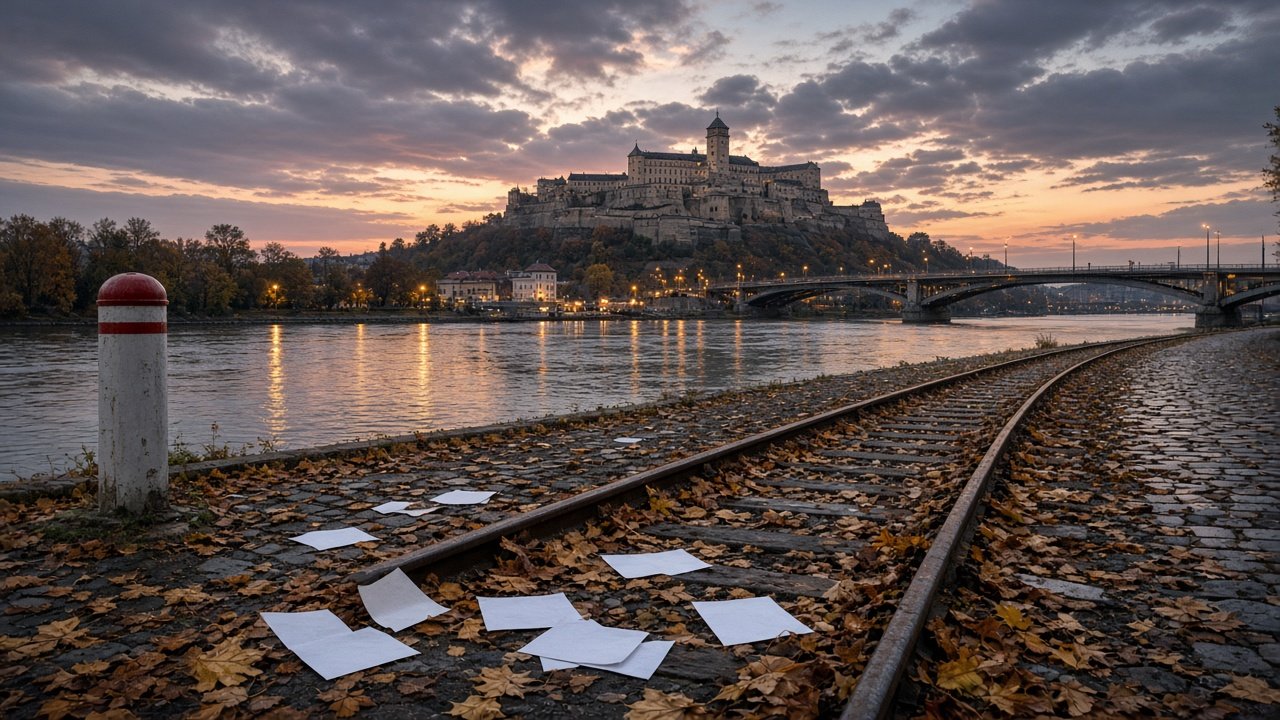
A student-led movement born from the Novi Sad station disaster won an absolute majority in Serbia on 25 October 2026, ending Aleksandar Vučić's long rule. Many outside Serbia expect a turn to the West. The winners say otherwise: no sanctions on Russia, no recognition of Kosovo. Why the 1990s embargo, cheap gas, a UN veto and public opinion make that stance rational, what it costs, and what Moscow, Beijing, Brussels, Pristina and Kyiv are watching for. Explainer with a short opinion section.
On the night of 25 October 2026, Aleksandar Vučić, who had dominated Serbian politics since 2014, stood at his party headquarters in Belgrade and said: “It is clear that we have lost these elections” (Guardian). The winner was not a rival party but the Student List, the electoral arm of a protest movement that began after the canopy of the newly renovated railway station in Novi Sad collapsed on 1 November 2024 and killed 16 people.
Much of the coverage abroad treats this as Serbia turning West. The winners themselves say something more complicated. They will not impose sanctions on Russia, and they do not accept Kosovo’s independence. Here is why, and what it means.
What happened on Sunday
With 8,077 polling stations processed, Serbia’s election commission (RIK) gave the Student List 52.54% and Vučić’s United Serbia list 39.29%, on a turnout of 68.78%, the highest in more than 30 years (Al Jazeera, Beta). These are preliminary figures; a later BBC count with 97% of stations put the students at 52.7% (BBC). Projections give the students about 138 to 141 of 250 seats, so they can govern alone. The Socialist Party of Ivica Dačić, part of every parliament since multiparty politics returned in 1990, fell below the threshold for the first time (Beta).
The movement has no single leader by design. Ilija Srdanović, a cardiologist and medical professor from Novi Sad, led the campaign and is seen as the likeliest prime minister, but no one has been named. Parliament must convene within 30 days of the final results, and a government must follow within 90 days (Al Jazeera).
Its programme is almost entirely domestic: an independent police unit answering to prosecutors, a ban on party loyalists running state companies, a law to seize unexplained wealth from officials, public scrutiny of big infrastructure contracts, and a push against retail monopolies to bring food prices down (Independent). Vučić and his party have always denied the accusations of corruption and repression.
The foreign policy that did not change
In September the movement wrote that “the Republic of Serbia will retain its principled stance on not introducing restrictive measures toward the Russian Federation”, pointing to Serbia’s own history with sanctions (Euronews). A memorandum in May rejected Kosovo’s independence. Candidates called Kosovo a “temporarily occupied” region to be reintegrated by peaceful means, and the list rejects earlier Belgrade–Pristina agreements on energy, licence plates and the use of the dinar (Independent). Leading candidates have also said Serbia would end arms exports to war zones, including sales to Western intermediaries.
This is not a disguise. It reflects four concrete pressures.
Memory. On 30 May 1992 the UN Security Council imposed a near-total trade embargo on what was then Yugoslavia, meaning Serbia and Montenegro, through Resolution 757. Three months later industrial production had fallen by 40%, and monthly inflation in 1993 reached 313 million percent (Bajić-Hajduković). Economists add an important correction: the sanctions pushed prices up by tens of percent, but the hyperinflation itself came mainly from a government printing money to cover its deficits (Arsić, 2022). Still, as that anthropological study of the “embargo cake” shows, the period lives on in family memory as empty shops and improvised recipes, and “sanctions” remains a loaded word in Serbian politics.
Energy. Gazprom is Serbia’s largest gas supplier, delivering around 2.2 billion cubic metres a year below market price. The country’s only oil refinery belongs to NIS, which is under US sanctions because of its Russian owners; Serbia needs US waivers to keep crude flowing until the Russian stake is sold to Hungary’s MOL (Independent). The students call this “an acute economic dependency”, not a geopolitical alliance. Joining EU sanctions now could put the winter gas supply at risk before any alternative exists.
Kosovo. Kosovo declared independence in 2008, but it cannot join the UN without a Security Council recommendation, which Russia and China can veto (OSF Western Balkans). The legal framework from 1999, Resolution 1244, did not settle Kosovo’s status. Any Serbian government that keeps the claim needs Moscow’s and Beijing’s vetoes. As Dimitar Bechev of Carnegie Europe put it, “there are strong nationalist voices in Studentska lista who would want to keep Russia onside because of Kosovo” (Euronews).
Voters. Serbia is the least EU-enthusiastic candidate country. The European Commission’s 2025 survey found 33% support for accession, against 91% in Albania (European Commission). Other polls give 39% (IRI) or a near tie of 46% for and 44% against (CeSID). One poll found 81% against NATO membership (N1/Lidington). An online survey by the COMPASS project found 64% against sanctions on Russia; it was not a probability sample, so treat that figure as indicative, not confirmed (COMPASS). A movement that won by uniting nationalists, liberals and the apolitical cannot open with the issue most likely to split it.
Where the money actually is
The paradox is that Serbia’s economy already lives in Europe. In 2024, 61% of its exports went to the EU, while Russia accounted for only about 3% of its trade, a twenty-year low (EKN). China is the biggest single investor, with about 30% of foreign investment inflows in 2022–2024, mostly in mining, metals and car parts, and about 91% of Serbia’s exports to China are copper ores and processed copper (EKN, BMEE 2026). So Russia matters for gas and diplomacy, China for factories and mines, and the EU for almost everything else.
How the others see it
Moscow hopes Serbia “will continue not to join Western sanctions”, in the words of Kremlin spokesman Dmitry Peskov, and said it still values Vučić. Beijing said it is ready to deepen ties with the new government (DPA). Brussels was warmer than the students’ own words: Enlargement Commissioner Marta Kos said “the door to the EU is open”. But eight member states blocked the opening of the next group of accession chapters, known as Cluster 3, in July, citing democratic backsliding and foreign-policy alignment (Euronews). Serbia matched only 67% of EU foreign-policy declarations in 2025, by one think tank’s count (ISAC Fund).
Hungary’s new prime minister, Péter Magyar, who ousted Viktor Orbán in April, was the first foreign leader to call. Montenegro’s prime minister hoped for “a new chapter … without unnecessary escalation” (Euronews). In Kosovo, Prime Minister Albin Kurti focused on the Albanian minority list in southern Serbia winning seats (Gazeta Express). The students’ rejection of past agreements gives Pristina little reason to expect quick progress.
Ukraine has a quieter stake. The Financial Times reported in 2024 that about €800 million of Serbian ammunition had reached Ukraine through intermediaries since 2022; Belgrade said it sold legally to third countries, and Russia’s foreign intelligence service later accused Serbia of supplying Kyiv (Ukrinform, Reuters). If the new government ends exports to war zones as promised, the “pro-Western” students could end up helping Kyiv less than the “pro-Russian” Vučić did.
Three scenarios
- Reform at home, caution abroad. The government spends its first year on police, courts and procurement, keeps neutrality, and lets the EU judge it on rule of law. This matches what candidates such as former central bank governor Dejan Šoškić have said: close the negotiating chapters first, ask the public about membership later (Independent).
- Split. The coalition divides between its pro-European and nationalist wings over Kosovo, sanctions or the arms ban, and the majority frays.
- Gradual alignment. Once the NIS sale and new gas routes reduce dependence on Russia, Belgrade quietly matches more EU positions without a dramatic sanctions vote.
None of these is certain. Euronews also recalls that the last reforming prime minister who took on organised crime and the security services, Zoran Đinđić, was assassinated in 2003 (Euronews). The risk is not only political.
Opinion: judge them by the courts, not the sanctions list
My view is that outsiders asking “is Serbia now with the West?” are asking the wrong first question. Sixteen people died in Novi Sad because a public building was renovated badly and no one answered for it. That is what these voters rose up over, and the test of the new government is whether the next death caused by negligence ends in a trial.
On Russia, I think the students’ caution is defensible for now. A government that cuts its own gas in its first winter would hand power back to the people it just beat. But it has a cost they should state honestly: as long as Serbia stays outside EU sanctions and rejects every deal with Pristina, the EU path stays blocked, and the 61% of exports that go to Europe give Brussels more leverage than Moscow’s gas does. Neutrality is a choice, not a free lunch.
The strongest sign of change on Sunday was not a slogan. It was a ruler who counted the votes, said he had lost, and promised not to obstruct the new parliament. Serbia has not seen that often. Protecting it matters more than any foreign-policy label.
Sources
- Al Jazeera: Serbia after Vucic: Who will be PM and when will a government be formed? (26 Oct 2026)
- Beta Briefing: Student Ticket Wins, Vucic Concedes Defeat (26 Oct 2026)
- BBC: Serbia's veteran ruler Vučić concedes election to student-led protest movement
- The Guardian: Serbian leader Aleksandar Vučić ousted by student movement in seismic election (25 Oct 2026)
- Euronews: Serbia's student victory raises hopes of an EU reset (26 Oct 2026)
- The Independent: Serbia's students won the election. Now they must navigate Russia and frayed EU relations (26 Oct 2026)
- DPA via Yahoo News: Moscow and Beijing to maintain ties with Serbia despite Vučić defeat (26 Oct 2026)
- UN Digital Library: Security Council Resolution 757 (1992)
- Bajić-Hajduković, Remembering the 'Embargo Cake': the legacy of hyperinflation and the UN sanctions in Serbia (Contemporary Southeastern Europe)
- Arsić, The quest for macroeconomic stability under sanctions and weak state (Panoeconomicus, 2022)
- European Commission: Special Eurobarometer and perception surveys in candidate countries (2025)
- IRI: Survey shows strong support for EU membership in four of five Western Balkans countries (Sept 2025)
- CeSID: Support for European integration in Serbia has polarised the public (June 2025, in Serbian)
- N1: Most Serbians oppose EU membership but see EU as key economic partner (Lidington Research poll)
- COMPASS project: Attitudes on Serbia's Foreign Policy 2025 (online survey)
- EKN (Swedish Export Credit Agency): Serbia country risk assessment
- EU vs. China: battle for trade and investments within a small open economy (Business, Management and Economics Engineering, 2026)
- ISAC Fund: Analysis of Serbia's alignment with EU foreign policy declarations and measures, 2025
- OSF Western Balkans: Kosovo's path toward EU and UN membership
- UN Press: Security Council authorizes civil and security presence in Kosovo (Resolution 1244, 10 June 1999)
- Ukrinform: Ukraine received EUR 800 million worth of ammunition from Serbia through intermediaries, citing the FT (2024)
- Reuters: Russia's spy agency says Serbia sold ammunition to Ukraine via Bulgaria, Czech Republic (June 2025)
- Gazeta Express: Kurti reacts to the Serbian election result
Comments