 Isidora & Cos Explain
Congress Passed Tough Russia Sanctions. Why Could One Order Switch Them Off?
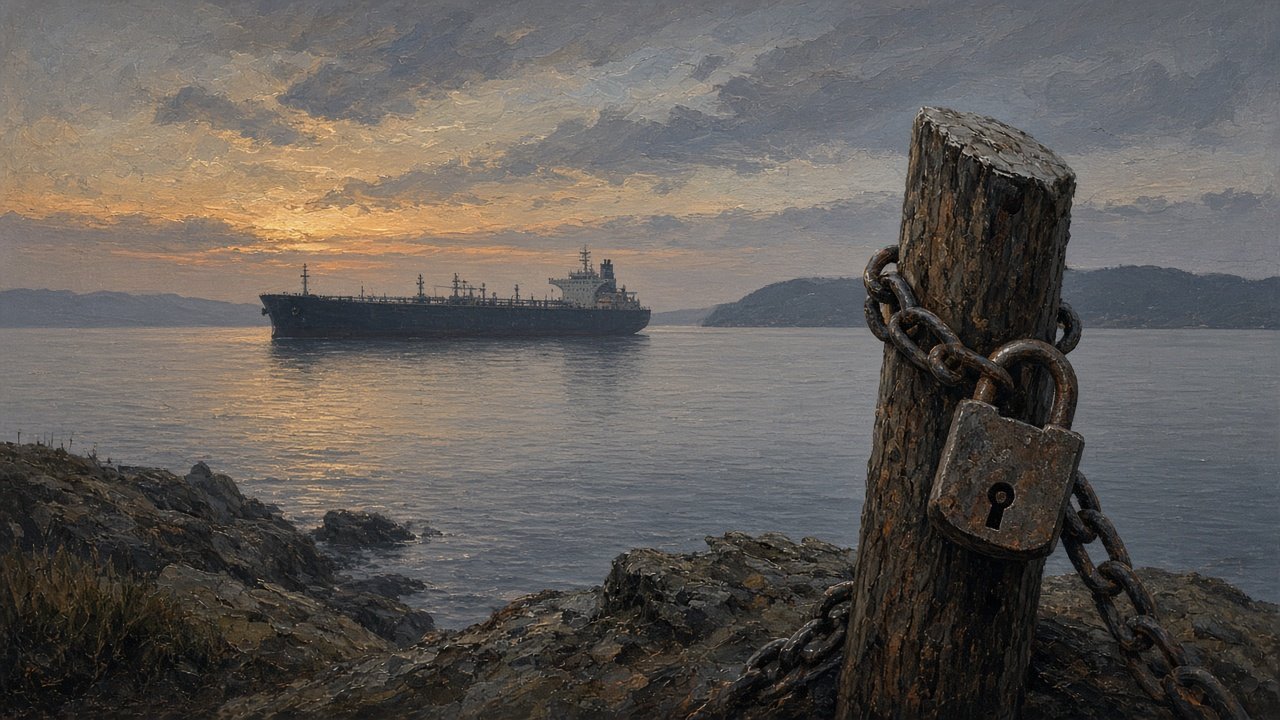
On 16 October 2026, two days before the Graham Act's measures were due to start, the US president waived almost all of them with one executive order. He could do it because the law itself lets him waive any sanction or duty after sending Congress a written national-interest certification and a report. Lifting the sanctions permanently would have required a 30-day review that Congress could block; a waiver needs none. This explainer covers what the waiver suspends and what stays, why a 2017 law built a stronger brake, what the 2019 Rusal vote teaches, what 100% tariffs on Russia's oil customers such as China, India, Turkey and EU members would cost during the Iran-war oil shock, whether sanctions on Russia work, whether the waiver is a bargaining chip in peace talks, four ways this could go, and my view.
Saturday, 18 October 2026, was supposed to be the day a new American law started to bite Russia. The Lindsey O. Graham Sanctioning Russia and Iran Act set tariffs of up to 500% on Russian goods, 100% on goods from the biggest buyers of Russian oil and gas, and mandatory sanctions on Russian banks, officials and shadow-fleet tankers. Two days earlier, on the evening of 16 October, the president signed an executive order that set those rates on paper and then waived almost all of them.
The obvious question: if Congress passed it and the president signed it, how can one order switch it off? The short answer is that Congress wrote the off switch into the law itself.
The switch is in section 115
The Graham Act became law on 18 September 2026. Its section 115 says the president “may” waive any sanction, restriction or duty under the Act. There is one condition. Before the waiver, he must send Congress a written certification that it is “in the national interests of the United States” and a report explaining why. The report must be unclassified, though it may carry a classified annex.
That is all. The section sets no waiting period, vote or time limit. The order says the certification and report were sent. According to a sanctions law firm’s analysis, neither has been made public.
The waiver also has no end date. Under the order, it lasts until the president, or the Secretary of State after consulting the Treasury and the US Trade Representative, decides that “further action” is appropriate.
Waiving is not the same as lifting
The law draws a sharp line between a waiver and a termination. Section 117 covers ending sanctions for good. For Russia, the president must first certify that Russia has signed a peace agreement accepted by Ukraine’s government and stopped all hostilities. Then the termination cannot take effect for 30 days, and during that time Congress can pass a joint resolution of disapproval to block it.
A waiver skips all of that. So a law that looks hard to undo on the termination side is easy to park on the waiver side.
Waivers themselves are common in sanctions laws, because Congress usually wants to leave the president room in diplomacy. What stands out here is the scale: almost the whole Act, two days before it started.
What is suspended, and what is not
The order waives the tariffs, the mandatory blocking of persons under section 102, the bank measures in section 103, and the new restrictions on Americans in sections 105 to 111. It also waives section 102(d), which had turned existing executive-order sanctions into statute, and section 117 along with it.
What it does not do is lift any existing sanction. Section 4(b) of the order keeps in force everything imposed under the executive orders of the Russia national emergency, including every person already designated. As the FesenkoLaw analysis points out, Sberbank, VTB and Gazprombank were already blocked under Executive Order 14024, and new American investment in Russia was already banned under a 2022 order. Much of the Act restated prohibitions that were already there.
So the honest summary is this: no new pressure arrives, and the old pressure stays exactly where it was. Russia gets no relief from existing sanctions, but it is spared the large new escalation that was due on 18 October, above all the threat of tariffs on its oil customers.
Why the president says he did it
The official reason is the national interest. Secretary of State Marco Rubio told reporters that the president wants 60 days “to analyze their impact on the U.S. and global economy given the pressure on global energy supplies,” NBC News reported. The same report says diesel prices have risen almost 70% since the war with Iran began in February, that the waiver followed a deal announced the week before to release Russian diesel onto the world market, and that the midterm elections are less than three weeks away.
The White House has also argued that enforcing the sanctions now would get in the way of peace talks, a claim examined below.
Critics in both parties disagree. Ukraine’s president called it “a financial reward for Putin”. Republican Senator Thom Tillis noted that the Senate had passed the Act 86 to 11.
A stronger brake existed in 2017
Congress knows how to build a tighter lock, because it did so before. The 2017 sanctions law known as CAATSA, in section 216, requires a report and a 30-day review not only before terminating Russia sanctions, but also before waiving them for a sanctioned person. During that review the president may not act, and Congress can pass a resolution of disapproval.
Even that brake has limits, as January 2019 showed. The Treasury planned to lift sanctions on Rusal and other companies linked to Oleg Deripaska. A disapproval resolution won 57 votes to 42 in the Senate, with 11 Republicans joining Democrats, but that fell short of the 60 votes needed to end debate, Reuters reported. And Reuters noted that to actually stop the president, the resolution would have needed two-thirds in both chambers to override a veto.
The lesson is that review procedures buy time and attention. They do not, by themselves, beat a determined president unless Congress has veto-proof numbers.
Can Congress undo it now?
Not through the Graham Act. Since section 115 has no review, Congress can reverse the waiver only by passing a new law, and a president can veto a law aimed at his own decision. Overriding a veto needs two-thirds of both chambers.
The Senate vote of 86 to 11 was above that line. The House was not. It approved the Act 262 to 159, about 62% of those voting, and 152 Democrats voted no; many Democrats opposed the bill because it gave the president new tariff powers, according to NBC. A bill that only blocks the waiver might draw different votes, but the starting arithmetic is short of two-thirds. Timing also matters: the House and Senate are on recess until after Election Day, AP reported.
The bigger picture: what 100% tariffs on Russia’s customers would cost
Most of the argument in Washington has been about procedure: did the president respect the will of Congress? Seen from Beijing, New Delhi, Ankara or Brussels, the question looks different. Who would actually pay for the Act’s biggest weapon, and would it hurt Russia more than everyone else?
Who the tariffs would hit
Section 113 does not tax Russia. It allows extra duties of up to 100% on all goods from the five largest importers of Russian crude oil or gas, and from the five countries that do most to help Russia evade oil sanctions, if they keep buying after 18 October. The bill would land on a Chinese appliance maker or an Indian textile firm that has nothing to do with Russian oil.
According to an analysis by the law firm Squire Patton Boggs, China, India, Turkey and several EU member states could fall within its scope. Senate aides cited in July named China, India, Slovakia, Hungary and Azerbaijan as the five largest crude buyers, and China, France, Japan, Hungary and Belgium as the leading gas buyers. These were indicative assessments, not official lists. The same analysis puts the stakes in numbers: the US imported $308.7 billion of goods from China in 2025 and $103.8 billion from India.
The buyers are few and large. Since December 2022, China has bought 50% of Russia’s crude exports and India 37%, followed by Turkey and the EU with 5% each, according to the Centre for Research on Energy and Clean Air (CREA). Turkey is the largest buyer of Russian oil products, with 26%. The EU is still the largest buyer of Russian LNG, with 48%, and of pipeline gas, with 32%. Hungary and Slovakia still receive Russian crude through the Druzhba pipeline under an exception to the EU embargo.
A trade war in the middle of two wars
Timing matters more than anything. The US and Israel went to war with Iran on 28 February, and shipping through the Strait of Hormuz has been disrupted ever since. On 16 October, as Iran stepped up attacks on ships, Brent crude touched $110 a barrel for the first time since May, CNBC reported. Kpler data cited in the same report put crude exports through Hormuz at about 70% of their pre-war average, and US diesel averaged $6.33 a gallon, more than 70% above a year earlier.
Forcing India and China to stop buying Russian oil in that market would not take those barrels out of the world’s needs. It would send the two largest buyers to compete for the same scarce cargoes from the Gulf, Africa and the Americas, and push prices up for everyone, including Europe, Japan and poorer importers who have no part in the dispute.
Washington itself has acted on this logic all year. When Hormuz closed, the US Treasury issued a 30-day licence in March allowing the sale of Russian oil already at sea. Treasury Secretary Scott Bessent called it a “narrowly tailored, short-term measure” to stabilise markets, CNBC reported. It was renewed in April. India imported a record 2.25 million barrels a day of Russian oil in March, about half of its imports, Hydrocarbon Processing reported. Then on 9 October the US agreed with Moscow to import Russian diesel, with a Treasury licence running until 7 April 2027, AP reported.
That is why many outside the US saw the threat as hard to carry out. “Punishing other countries for buying Russian energy while doing so itself would invite accusations of double standards,” Ajay Srivastava of the Global Trade Research Initiative, a New Delhi think tank, told the Hindustan Times.
How the buyers see it
India has already paid a price for the threat. Its refiners cut Russian crude imports from about 2.7 million barrels a day at the July peak to about 1.8 million, industry executives told the Hindustan Times. They replaced it with costlier oil from the US, West Africa, South America and the Gulf. India’s crude import bill rose 31.6% in a single month, to $15.4 billion in September, while volumes rose 14.2%, according to the petroleum ministry’s data cell. Indian experts quoted in the same report called the waiver “temporary” relief that gives no lasting certainty. India is also in the middle of trade talks with Washington. A CSIS commentary notes that India could respond to tariffs by buying less American gas. The US supplied more than half of India’s natural gas imports between June and September, according to Vortexa data cited there.
China rejects the idea outright. Its commerce ministry said it opposes unilateral sanctions without a UN mandate and “so-called secondary sanction measures”, and that it reserves “the right to take all necessary measures” to protect Chinese companies (MOFCOM). It has leverage of its own. The US and China have just extended a trade truce to 10 January 2027 that keeps tariffs lower and rare earths flowing, CNBC reported. During President Xi Jinping’s visit to Washington they also agreed to cut tariffs on $30 billion of goods in each direction (Reuters). A 100% duty on all Chinese goods would very likely end that truce.
The European Union supports pressure on Moscow but does not want to be caught in the crossfire. A Commission spokesperson told Euronews that the EU has “clear expectations” that the law “should not impose new commercial barriers” between the EU and the US. Europe’s gas storage was at its lowest for the time of year since records began in 2011, the same report said, and a full ban on Russian LNG takes effect on 1 January 2027. Duties on France, Belgium, Hungary or Slovakia would also strain the trade framework the EU and US agreed in August 2025, Squire Patton Boggs notes.
Turkey sits in between: a NATO member that buys Russian oil products and gas. Turkish media greeted the waiver as sparing Türkiye from possible US duties.
Who would lose most
Economic modelling suggests the country imposing the tariff could be among the biggest losers. Researchers at the Centre for Inclusive Trade Policy at the University of Sussex simulated a 100% tariff on manufactured goods from China, India and Turkey. In the short run, US welfare fell by 0.84%, India’s by 0.58%, Turkey’s by 0.54% and China’s by only 0.24%, because China’s large economy can sell elsewhere. The winners were countries outside the fight, such as Mexico, Vietnam and Bangladesh. At a 50% rate, the US loss fell to 0.28%. The author stresses that the results are illustrative, and they assume no retaliation, so a real trade war could be worse.
The risk was flagged long before this law passed. In 2025, Sergey Vakulenko of the Carnegie Endowment called secondary tariffs on Russian oil “a lose-lose proposition”. If buyers defied them in the middle of a global fuel shortage, he argued, Washington would have to choose between deepening a world economic crisis and losing credibility.
Do sanctions on Russia work at all?
The honest answer is that they work partly, and the evidence points both ways.
The case that they bite. Russia’s economy has nearly stalled. In August the Bank of Russia cut its 2026 growth forecast to between 0% and 1% and raised its inflation forecast to 6–7%. The Kyiv School of Economics Institute calculates that the federal budget deficit for January to August reached 5.8 trillion rubles. That is 48% more than a year earlier and already 21% above the finance ministry’s revised target for the whole year. The liquid part of Russia’s rainy-day fund has shrunk by 60% since early 2022. Enforcement against the shadow fleet has also had results: the number of shadow tankers sailing under false flags fell from 120 a year ago to 48, which CREA credits to detentions by coastal states and diplomatic pressure on flag registries.
The case that they fall short. Russia still earned about €625 million a day from fossil fuel exports in September, according to CREA. Its Urals crude sold for an average of $90.7 a barrel, more than double the EU and UK price cap of $44.10. CREA, which supports tougher sanctions, concedes that the price cap “has failed to impose a durable constraint” on Russia’s crude earnings. Sanctioned shadow tankers carried 57% of Russia’s seaborne oil. And the biggest factor this year has had nothing to do with sanctions: CREA estimates that higher prices caused by the Iran war added about $35.9 billion to Russia’s seaborne export revenues in the first six months of the conflict.
Both things can be true. Sanctions raise Russia’s costs and squeeze its budget, but they have not stopped the war, and the world oil price, which no sanctions law controls, can wipe out their effect in a few months. Existing sanctions, including earlier American measures and the European and British price cap, remain in force; the waiver only stopped a new layer from being added.
A bargaining chip for peace talks?
There is one more possible reading: that the threat is worth more unused than used. A White House spokesperson, Taylor Rogers, told Axios that enforcing the sanctions now “would impede ongoing US efforts to negotiate a durable and comprehensive peace agreement between Ukraine and Russia”, and that the president “retains the ability to exercise these authorities at any time”, Kyiv Post reported.
The talks are real, even if their direction is contested. The US envoys Steve Witkoff and Jared Kushner proposed at a meeting in Miami on 10 October that Europe unfreeze some Russian state assets and move them into a vehicle overseen by Washington, the Financial Times reported. European officials rejected the idea, according to Ukrainska Pravda’s summary of the report. The envoys have also urged Ukraine and Europe to consider resuming Russian gas transit through Ukraine as part of a settlement, the New York Times reported, and Germany pushed back, according to Kyiv Post.
The CSIS commentary makes a similar point about the law itself: its value “may therefore lie less in the tariffs themselves than in the uncertainty surrounding when, how, and against whom they might be used.” The weakness of that strategy is that a suspended threat only works if Moscow believes it might be used. Ukraine’s president does not think it does: “It definitely does not stop the war,” he said. And a short “energy ceasefire” that Washington tried to broker between Russia and Ukraine had already fallen apart by 16 October, according to CNBC.
Four ways this could go
1. Partial return after 60 days. If the stated review is real, the administration could restore some pieces, such as sanctions on shadow-fleet tankers or Russian officials, while keeping the tariffs on oil buyers waived. That would match the energy-price reason given and avoid a trade war while oil prices stay high.
2. Quiet permanence, used as leverage. The waiver has no end date, so it can simply stay. The Act runs until 2031 but sits dormant, the existing executive-order sanctions do the real work, and the threat of reviving it is kept in reserve for peace or trade talks.
3. Sudden reversal. The order already sets the tariff rates and delegates the work, so revoking the waiver takes one decision. If talks with Moscow fail or energy prices ease, the full package could return quickly, which is why banks and traders cannot treat this as permission. Tariffs on China, though, would collide with the US-China trade truce that runs to 10 January 2027, so India or smaller buyers could be the easier first targets, as the CSIS commentary suggests.
4. Congress legislates. After the election, members could pass a narrower law, for example one blocking purchases of Russian oil. Without two-thirds in the House it would likely face a veto it cannot override, unless the election changes the numbers or the White House agrees to a compromise.
My view
On the tariffs, I think the waiver is defensible. Threatening 100% duties on China, India and possibly European allies in the middle of an oil shock, while the US itself licenses Russian crude cargoes and buys Russian diesel, was never fully credible. Carrying it out would likely have hurt Americans, Indians, Turks and Europeans at least as much as Russians, and pushed up fuel prices for countries that have nothing to do with the war. Diesel up 70% is not a pretext; it is real hardship for farmers, truckers and households everywhere. Keeping that threat in reserve, rather than firing it into a fragile market, is reasonable risk management.
The open question is everything else. The order did not waive only the tariffs. It also waived the mandatory sanctions on Russian officials, state banks and shadow-fleet tankers, measures that do not raise anyone’s import bill. There is a trade-off even here: sanctioning many more tankers could tighten oil supply, which is why Western sanctions have mostly aimed at Russia’s revenues rather than its volumes. But sanctions on officials and banks have little effect on prices, and the shadow-fleet data suggest that steady enforcement does work at the margin. A narrower waiver, covering the tariffs and perhaps the shipping measures, would have kept most of the energy benefit while sending Moscow a clearer message.
If the waiver really is a bargaining chip, it works only if Russia believes it could be played. That argues for publishing the unclassified report Congress received, and for setting conditions under which pieces would return. And Congress still made its own choice: a waiver that asks for nothing more than a report nobody outside government can read. The CAATSA model of a short review before any broad waiver remains a reasonable standard, whoever is president.
The test is simple and checkable. If the 60-day review ends with nothing restored and no progress in talks, the “review” was a delay in name only. If it ends with targeted measures back in place and the tariff threat kept for real negotiations, the decision will look wiser than it does today.
Sources
- The White House: Implementing the Lindsey O. Graham Sanctioning Russia and Iran Act of 2026 (16 Oct 2026)
- LII / Cornell: 22 U.S. Code § 10815, Waiver (Graham Act section 115)
- GovInfo: Public Law 119-111, text including section 117 (termination and congressional review)
- LII / Cornell: 22 U.S. Code § 9511, congressional review of Russia sanctions actions (CAATSA section 216, 2017)
- FesenkoLaw: Graham Act Waiver, what the 16 October order suspends and what stays in place (17 Oct 2026)
- NBC News: Trump doubles down after waiving new Russia sanctions (16-17 Oct 2026)
- AP News: Trump's decision to waive Russian sanctions outrages Congress (Oct 2026)
- Office of the Clerk, US House: Roll Call 308, H.R. 5334 (16 Sep 2026)
- Reuters: US House passes sanctions, tariff bill to raise economic pressure on Russia (16 Sep 2026)
- Reuters: Bid to keep U.S. sanctions on Russia's Rusal fails in Senate (16 Jan 2019)
- US Senate Daily Press: Wednesday, January 16, 2019 (cloture vote on S.J.Res. 2)
- Squire Patton Boggs: Sanctions by statute, the Graham Act and tariffs on Russia's energy buyers (Sep 2026)
- CREA: September 2026, monthly analysis of Russian fossil fuel exports and sanctions (16 Oct 2026)
- CNBC: Brent oil touches $110 as Iran escalates Hormuz attacks (16 Oct 2026)
- US Treasury, OFAC: Russia-related General License 134A, Russian oil loaded on vessels as of 12 March 2026 (19 Mar 2026)
- CNBC: US allows temporary purchases of Russian oil already at sea to stabilize energy markets (13 Mar 2026)
- Business Standard: US renews Russia oil waiver, offering relief to India (19 Apr 2026)
- Hydrocarbon Processing: US waiver set to keep Russian oil exports to India near record high (21 Apr 2026)
- AP News: Trump strikes deal with Putin for Russian diesel (9 Oct 2026)
- Hindustan Times: Indian refiners de-risked in advance, Russia sanctions waiver a 'temporary' relief (17 Oct 2026)
- CSIS: The New Sanctioning Russia Act, optics for now, leverage for later (5 Oct 2026)
- China Ministry of Commerce: Spokesperson's remarks on the US signing the Graham Act into law (19 Sep 2026)
- CNBC: US-China trade truce extended for two months, Bessent says (24 Sep 2026)
- Reuters: China, US agree to AI dialogue, tariff cuts on $30 billion in goods during Xi visit (26 Sep 2026)
- Euronews: Trump's Russia tariffs could threaten to deepen Europe's LNG squeeze (23 Sep 2026)
- The Turkiye Times: Trump suspends Graham Act sanctions, sparing Türkiye from possible US tariffs (17 Oct 2026)
- Centre for Inclusive Trade Policy (University of Sussex): The tariff that boomerangs (15 Oct 2026)
- Carnegie Endowment: Trump's secondary sanctions on Russian oil are a lose-lose proposition (7 Apr 2025)
- Bank of Russia: Commentary on the medium-term forecast (Aug 2026)
- KSE Institute: Russia Chartbook, September 2026
- Kyiv Post: White House defends Russia sanctions waiver to aid peace talks (18 Oct 2026)
- Ukrainska Pravda: US proposes frozen Russian funds go to a Washington-overseen entity, FT reports (15 Oct 2026)
- Kyiv Post: Trump envoys push Russian gas transit in Ukraine peace talks (18 Oct 2026)
Comments