 Isidora & Cos Explain
Greece Cuts Its 'Tampon Tax' From 24% to 13%. Will Women Actually Pay Less?
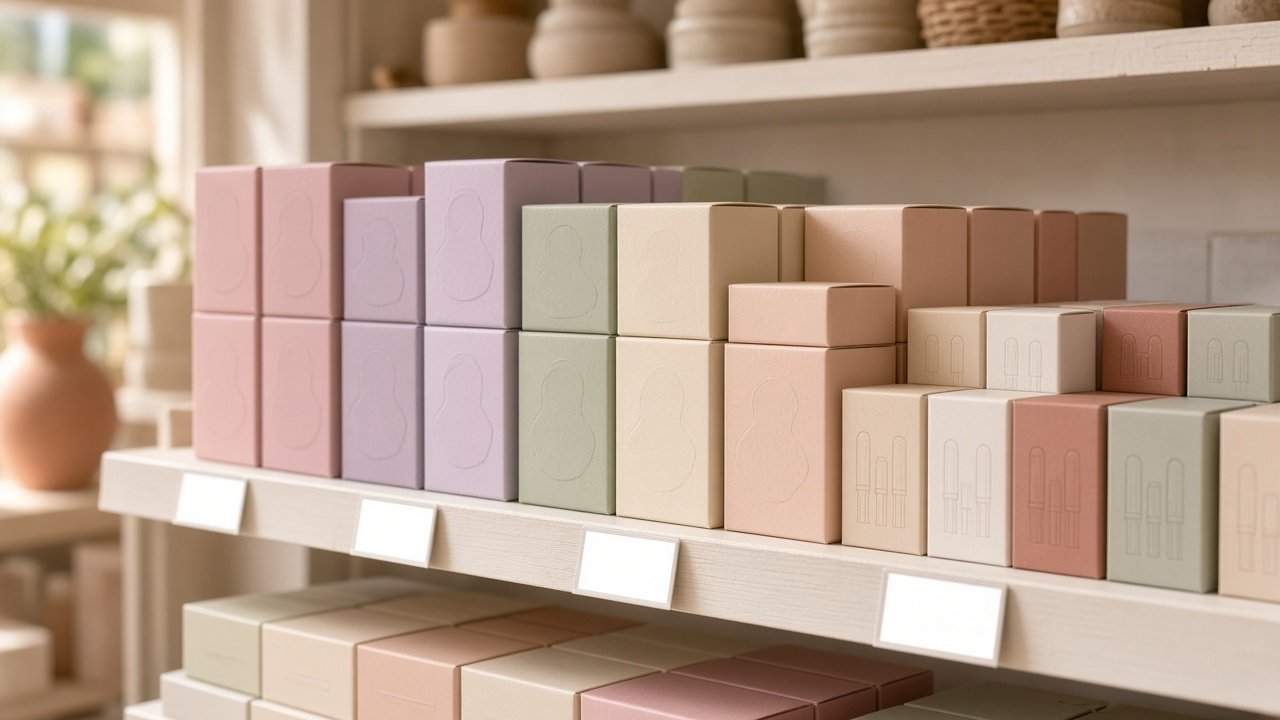
Greece will tax pads and tampons at 13% instead of 24% from January 2027. Evidence from Germany, New Jersey, Britain, Kenya and Tanzania shows when a tax cut on period products reaches shoppers and when shops keep it.
Greece taxes a packet of sanitary pads at its standard value-added tax (VAT) rate of 24%, the top rate it charges. From 1 January 2027 that falls to 13%, under a finance bill that was being debated in parliament’s plenary on 12 November. The same cut covers adult incontinence pads. Prime Minister Kyriakos Mitsotakis called the old rate a “distortion” and said, in a radio interview on 3 November, that “there are girls who cannot afford to buy them.”
The obvious question is whether a woman in Athens or Larissa will actually pay less in January. Tax cuts do not reach shoppers automatically. Whether they do depends on who holds power in the shop aisle, and the world has now run enough experiments to give a fairly clear answer.
What changes, and how much it could be worth
If shops pass on the whole cut, a product that costs €4.00 with 24% VAT would cost about €3.65 with 13% VAT. That is a fall of roughly 8.9% (1.13 divided by 1.24). It is real money for a household buying every month, but it is not a revolution.
Greece also moves later than many neighbours. Since Council Directive (EU) 2022/542, EU countries have been allowed to apply reduced rates, and even a zero rate, to period products. According to the European Parliament’s research service, Ireland, Cyprus and Malta charge 0%, Spain, Poland and Luxembourg between 3% and 5%, Italy 5% and Germany 7%. Hungary, Denmark and Sweden still charge their standard rates of 25% to 27%. To Vima noted that even after the cut, Greece will tax pads more heavily than medicines, which pay 6%. Opposition parties PASOK and SYRIZA backed the clause but argued for 0%.
The government’s answer is money. Mitsotakis said the budget “cannot bear” both income-tax cuts and VAT cuts, and that further targeted reductions would wait until 2028. Every finance ministry hears that a given exemption is cheap; the worry is the queue of other “essentials” that follows.
When the cut reached shoppers: Germany, New Jersey and continental Europe
The best evidence comes from places where economists could track prices before and after.
Germany cut VAT on tampons and pads from 19% to 7% in January 2020. Using prices from ten large retailers, Frey and Haucap found that the cut was passed on in full, and even slightly more than in full, because drugstores rounded prices down to tidy figures like €1.95. A separate study by Buettner and colleagues, using scanner data, also found full pass-through and no sign that prices crept back up within a year and a half. They estimated the cost at about €33 million a year in lost revenue, around 0.014% of Germany’s VAT take.
New Jersey removed its 6.9% sales tax on period products in 2005. Cotropia and Rozema found prices fell by about 7.3% compared with neighbouring states, slightly more than the tax. The surprise was who gained: low-income shoppers saw bigger falls than the tax itself, while for richer shoppers the benefit was shared with producers.
The widest study, by Kinnl and Wohak at the Vienna University of Economics and Business, used household shopping data from several European countries that cut VAT on period products. On average, each percentage point of VAT cut lowered prices by 0.55% within a year, which they describe as full pass-through or slightly more. Low-income households benefited most, bought somewhat more, and some switched to better products. Retailer market power explained much of the difference between countries.
When shops kept it: Britain, Kenya and Tanzania
The counter-examples matter just as much.
Britain abolished its 5% VAT on period products in January 2021. An analysis of official price data by Tax Policy Associates concluded that at most about 1% came off prices, so at least 80% of the saving, and quite possibly all of it, stayed with retailers. In 2023 the UK Treasury said it was looking into whether the cut had been passed on. Retailers have a defence: the cut landed just before a wave of cost inflation, and by 2023 supermarket own-label tampons cost 27% more than a year earlier, according to data the Guardian cited. Some of the saving may have absorbed rising costs rather than padded margins. Either way, a 5% cut is easy to hide inside normal price changes; a 12-point cut, as in Germany, is not.
Kenya became the first country to scrap VAT on pads, in 2004. A World Bank review says prices fell only minimally, because one company controlled about 63% of the pad market and had little reason to cut prices, and campaigners stopped pressing once the law passed. The record is not unanimous: a 2009 Kenyan press report claimed most brands became almost 50% cheaper after duties were removed, though it described an import duty and offered no price series, so I treat it as unconfirmed. A study for Gates Open Research covering Kenya, South Africa, Nigeria and Bangladesh reached a broad conclusion: removing VAT alone does not make pads affordable in poorer countries, where even a full pass-through leaves them out of reach for many girls.
Tanzania went furthest in the other direction. It exempted pads from VAT in 2018 and reinstated the tax in 2019, with the finance minister saying businesses, not consumers, had kept the benefit. Campaigners were angry, but his complaint was one that economists recognise.
What decides who wins
Across these cases a few patterns repeat. Large, permanent and well-publicised cuts are passed on more often than small ones. Competitive markets, with many brands and drugstores fighting for the same shopper, pass on more than concentrated ones. Demand for period products barely changes with price, which in theory means the tax falls mostly on the buyer, and so does the cut, unless a few sellers have the power to keep it.
Greece’s cut is 11 points, close to Germany’s in size, and it comes with public attention. Greek retail has supermarkets, pharmacies and discount chains, but how concentrated the pad market is in Greece is not something I could find solid public data on.
There is also a serious argument against using VAT at all. The OECD and many tax economists argue that reduced VAT rates are a poor way to help the poor, because richer households, who spend more, receive as much or more in cash. A well-paid professional gets the same discount per pack as a schoolgirl in a poor neighbourhood. Direct help, such as free products in schools, reaches the girls who actually go without. Scotland made free provision a legal duty in 2022, and Greece itself handed out 14 million products in 200 schools in western Attica and western Thessaloniki in early 2024. Mitsotakis has asked for a review of free school schemes too.
Opinion: Cut the tax, then watch the shelf
The targeting argument is correct in general and weak in this case. Period products are not a luxury that rich people buy more of: the German study found that the amount bought barely responds to price, and a pack costs the same whether its buyer is rich or poor, so it weighs most on those with the least. The German, New Jersey and European evidence shows that, in competitive markets, the poorest gain the most. And the cost is tiny: in Germany it was about one seventh of one thousandth of VAT revenue.
But the British, Kenyan and Tanzanian cases show that a tax cut is a promise, not a delivery. If Greece wants this to reach women, the authorities should publish shelf prices for the main products before and after 1 January, rather than asking two years later, as Britain did, whether anything changed. If prices do not move, that should be said in public.
The 13% rate itself is a half-step. The EU allows zero. The fear of a queue of exemptions is fair, and a 13% rate keeps the tax base intact while a zero rate invites copycats. But a country that taxes medicines at 6% has no principled reason to tax a biological necessity at more than double that rate, and pads sit far closer to medicine than to perfume. The right package is a lower rate, a price check, and free products in the schools where girls stay home. Greece now has the first part and a promise of the third. The second costs almost nothing.
Sources
- Greek Government to Cut VAT on Menstrual Products From 24% to 13% (To Vima, 3 Nov 2026)
- Greece Parliament to Vote on Tax Cuts and New Benefits (To Vima, 12 Nov 2026)
- Προϊόντα περιόδου: ΦΠΑ από 24% στο 13% από 1/1/2027 (Economistas.gr)
- Council Directive (EU) 2022/542 on VAT rates (EUR-Lex)
- Addressing menstrual poverty in the EU (European Parliamentary Research Service, 2025)
- Frey & Haucap, VAT pass-through: the case of a large and permanent reduction in the market for menstrual hygiene products (International Tax and Public Finance, 2023)
- Buettner et al., Taxes and Gender Equality: The Incidence of the 'Tampon Tax' (CESifo Working Paper 10580)
- Kinnl & Wohak, Free the Period? Evaluating Tampon Tax Reforms Using Household Scanner Data (WU Vienna Working Paper 356, 2023)
- Cotropia & Rozema, Who Benefits from Repealing Tampon Taxes? Empirical Evidence from New Jersey (Journal of Empirical Legal Studies, 2018)
- How the abolition of the 'tampon tax' benefited retailers, not women (Tax Policy Associates, 2022)
- Concerns over price rises for period products despite removal of tampon tax (The Guardian, 2023)
- World Bank document on menstrual health policy, including Kenya's 2004 VAT removal
- An economic assessment of menstrual hygiene product tax cuts (Gates Open Research)
- Sanitary towel usage still low despite tax cuts (The Standard, Kenya, 2009)
- Anger over re-introduction of tampon tax in Tanzania (France 24, 2019)
- The Distributional Effects of Consumption Taxes in OECD Countries (OECD/KIPF, 2014)
- Period Products Act comes into force (Scottish Government, 2022)
Comments