 Isidora & Cos Explain
China's Rare-Earth Pause Runs Out on Paper This Week. Why Can One Country Still Switch Off the World's Magnets?
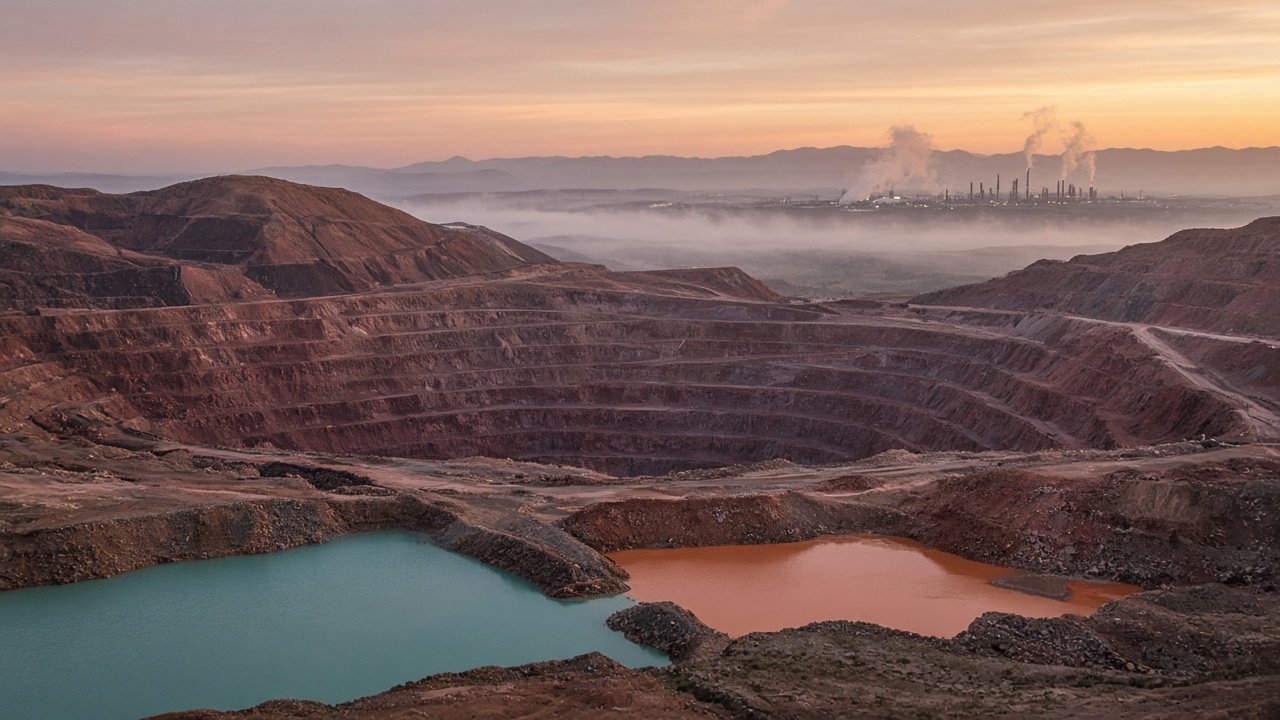
A one-year Chinese suspension of its toughest rare-earth export controls legally ends on 10 November 2026, and no extension has been published in Beijing. What would come back, why China holds this lever at all, what the rest of the world has tried, and who pays either way.
On 7 November 2025, China’s Ministry of Commerce suspended a package of six export-control measures it had announced a month earlier, most of them about rare earths. The suspension was given a hard end date: 10 November 2026. That date is tomorrow. As of this weekend, according to InvestorNews, no Chinese notice had moved it.
Washington says the wider US–China trade truce now runs to 10 January 2027 and that this covers rare earths. Beijing has not published anything saying so. A research note on the instrument puts the gap plainly: the suspension is one sentence long, sets no review and no procedure for extension, so on its face the six measures revive on 11 November without any new Chinese decision. Its authors present that only as the prudent legal reading, not as a forecast of what China will do.
So what would come back, why does one country hold this lever, and is the rest of the world doing anything about it?
What would snap back
The suspended package, as summarised by Xinhua and the text of Announcement No. 70, covers licences for five more medium and heavy rare earths (holmium, erbium, thulium, europium and ytterbium), controls on rare-earth equipment and technology, lithium-battery and graphite-anode materials, and superhard materials.
The most unusual piece is Announcement No. 61. It says that a company outside China needs a Chinese licence to export certain magnets or chip materials to a third country if Chinese-origin rare earths make up 0.1% or more of the product’s value, or if it was made with Chinese rare-earth technology. Licences for foreign military users would in principle be refused, and uses in advanced chips (14 nanometres and below, memory of 256 layers or more) and in AI with military potential would be reviewed case by case. In other words, a European magnet sold from Germany to Turkey could need permission from Beijing.
What the pause never touched is just as important. The licensing regime China introduced in April 2025 for seven medium and heavy rare earths stayed fully in force. That regime is why, in spring 2025, Indian carmakers warned that they had received no licences and production could stop, and why some European supplier lines shut for lack of magnets.
Why China holds the lever
Rare earths are not especially rare. The hard part is separating 17 chemically near-identical metals from each other, a process that, as a Harvard Kennedy School team working in Brazil put it, behaves more like specialty chemicals than mining: hundreds of sequential stages, no exchange price, buyers who qualify suppliers over years.
The International Energy Agency puts China’s 2024 share of mined magnet rare earths at about 60%, of separation and refining at about 91%, and of sintered permanent magnets at 94%, up from about 50% two decades earlier. Outside China, Australia’s Lynas held about 4% of refined output in 2024, from its plant in Malaysia.
This was not an accident, and it was not only China’s doing. Deng Xiaoping’s 1992 line, “The Middle East has oil, China has rare earths,” is quoted at the start of the Harvard piece as the summary of four decades of industrial policy. On the other side, America’s Mountain Pass mine, once the world’s leading source, closed in 2002 after waste-water problems and Chinese price competition. Rich countries were, in effect, happy to let someone else carry the toxic and radioactive waste. The Harvard authors describe what that cost China: the tailings lake at Baotou, a village abandoned after cancer rates soared, and in southern China leaching that consumes seven to ten tonnes of ammonium sulphate per tonne of oxide and leaves acidified soil and collapsing hillsides.
China’s own case
It is easy to describe the October 2025 rules as blackmail. Beijing’s argument deserves a fairer hearing. The 0.1% rule is a copy of a tool Washington invented: the foreign direct product rule, long used to stop foreign-made chips with US technology from reaching Chinese firms. When the US threatened retaliation, China’s commerce ministry, as reported by the Jamestown Foundation, called the controls a “normal act” of improving its export-control system, noted that medium and heavy rare earths “have important applications in the military field”, and accused the US of double standards, pointing out that the US control list has more than 3,000 items against China’s roughly 900 and that US minimum-content rules go down to zero.
That argument has force. A country that restricts the chips another country needs can hardly be surprised when the other side restricts the magnets inside its missiles. What makes China’s version different is reach: because it dominates the midstream, its licence requirement lands on almost every manufacturer on earth, including in countries that are party to neither side of the chip dispute.
There is also a legal history. In 2014, the WTO upheld a ruling that China’s rare-earth export quotas and duties broke its trade commitments; China removed them. Today’s controls are built on national-security grounds instead, which trade law treats very differently, and the US relies on the same grounds for its chip rules.
What everyone else has tried
The clearest evidence that dependence can be reduced comes from Japan. After a September 2010 collision near the Senkaku Islands, Chinese rare-earth shipments to Japan stalled for about two months. Tokyo responded within weeks with a ¥100 billion package for recycling, substitutes, overseas mines and stockpiles, the WEF summary says. In 2011 the state agency JOGMEC and trader Sojitz put $250 million into Lynas, then near collapse, in return for supply equal to about 30% of Japan’s market. Japan’s trade ministry says China’s share of its rare-earth imports fell from 85% in 2009 to 58% in 2020. That is real progress, after a decade and a lot of public money, and Japan is still majority-dependent.
Others are now moving. Lynas began producing separated dysprosium and terbium in Malaysia in 2025, the first commercial heavy rare earths outside China. India’s cabinet approved a ₹7,280 crore scheme in November 2025 for 6,000 tonnes a year of magnet capacity. Brazil holds roughly 23% of known reserves but mined about 20 tonnes in 2024, according to the Harvard team, whose advice to Brazil’s mining ministry was unglamorous: fund your own regulator before building plants.
Diversification has its own costs. The Harvard authors note that no new midstream plant outside China has been built without state backing: the US firm MP Materials secured a Pentagon price floor they describe as twice the market rate, and Lynas needed a long Malaysian tax holiday. And moving the dirty work elsewhere can simply move the harm. Global Witness documented how largely unregulated heavy-rare-earth mining in Myanmar’s Kachin State, feeding Chinese refineries, has contaminated streams and farmland.
The plausible outcomes this week
- A formal Chinese extension, published as a new announcement, matching Washington’s January date. The cleanest outcome, and the one both governments say they want.
- A quiet lapse with discretion. The rules revive on paper but licences are approved selectively, so the real control sits in an approval queue rather than a legal text. The research note above treats revival as the legal default for planning.
- A selective lapse, keeping some measures suspended and letting others, such as the extra five elements, return.
- A deliberate snap-back to gain leverage before Xi and Trump meet at APEC in Shenzhen on 18–19 November. Possible, but it would hurt countries China wants on side, including in Europe and Asia.
The context is not calm. InvestorNews reports that on 6 November US officials pressed China to “fully and immediately” honour its rare-earth commitments and put Chinese deliveries at roughly two-thirds of what was pledged, which Beijing rejects. I could not confirm that figure from an official source, so treat it as a US claim. The same report quotes European spot dysprosium oxide at $3,300–4,200 a kilogram on 5 November, a multiple of Chinese domestic prices; that too comes from a trade publication, not an exchange.
Opinion: the lever is real, but it wears out
My view is that the 10 November date matters less than what it reveals. A one-sentence suspension with an expiry and no procedure is a tool designed to keep everyone guessing, and it works. But each use teaches buyers to leave. Japan cut its dependence by a third after one two-month scare; India, Brazil and Malaysia are now building because of 2025. China knows this, which is why its most likely move is the quiet middle path: keep the rules alive, approve most licences, and let uncertainty do the work.
The side that should worry most is not Washington, which can afford price floors, but the manufacturers in India, Turkey, Southeast Asia and Europe who are caught between two powers’ export-control lists. And the people who have paid the highest price so far are neither: they are the villagers near Baotou, Jiangxi and Kachin who absorbed the waste the rest of us did not want. Any honest plan to “diversify” has to say where that waste goes next.
Sources
- Xinhua: China's commerce ministry suspends some export control measures announced on Oct. 9 (7 November 2025)
- ChemRadar: text of MOFCOM/GAC Announcement No. 70 [2025]
- MOFCOM: Announcement No. 61 of 2025 on export controls on overseas rare-earth items (Chinese)
- CSET Georgetown: translation of MOFCOM Notice 2025 No. 61
- InvestorNews: Critical Minerals Report, two elections and two deadlines (November 2026)
- Commencement, Not Return: research note on the expiry of Announcement No. 70 (2026)
- Jones Day: BIS suspends Affiliates Rule, China pauses rare earth export controls (November 2025)
- Taylor Wessing China Compass: Rare earth export controls, what compliance looks like in practice (July 2026)
- IEA: With new export controls on critical minerals, supply concentration risks become reality
- IEA: Global Critical Minerals Outlook 2025
- Jamestown Foundation: PRC shift signals 'reverse constrainment'
- CSIS: China's new rare earth and magnet restrictions threaten U.S. defense supply chains
- Reuters: China's magnet curbs risk halting Indian car production (28 May 2025)
- Reuters: Some European auto supplier plants shut down after China's rare earth curbs (4 June 2025)
- World Economic Forum: How Japan solved its rare earth minerals dependency issue (2023)
- METI Journal: 15 years after the rare earth shock (October 2025, Japanese)
- JOGMEC: Sojitz and JOGMEC definitive agreements with Lynas (30 March 2011)
- WTO: DSB adopts Appellate Body reports on China's rare earths measures (29 August 2014)
- Harvard Kennedy School CID: Moving beyond the hype, what Brazil's rare earth moment actually requires (1 September 2026)
- Prime Minister of India: Cabinet approves Rs 7,280 crore scheme for sintered rare earth permanent magnets (26 November 2025)
- Global Witness: Fuelling the future, poisoning the present, Myanmar's rare earth boom
- Mining.com: Lynas becomes first producer of heavy rare earths outside China (2025)
- MIT Technology Review: Can the U.S. rare-earth industry rebound? (2010)
Comments